Today, utilities are planning transmission corridors around renewable clusters. Manufacturers are signing long-term green power agreements.
Renewable energy is now a core part of modern infrastructure and industrial planning. The blog shares:
A few years ago, renewable energy was still treated like a parallel conversation. Important, yes. But separate from mainstream industrial planning. This has now changed.
Today, utilities are planning transmission corridors around renewable clusters. Manufacturers are signing long-term green power agreements. Data centres are evaluating where reliable, clean electricity will actually be available before deciding where to build. Even the conversation around grid stability now includes storage, hybrid systems, and dispatchable renewable power.
So when people ask what is renewable energy, the answer is no longer limited to solar panels or wind turbines alone. In reality, renewable energy has become part of a much larger infrastructure transition.
India reflects this shift clearly. According to the Ministry of New and Renewable Energy (MNRE), the country crossed 220 GW of renewable energy capacity in 2025.
But here is the more important development. The industry is now moving beyond simple capacity addition. The focus is shifting toward reliability. Can renewable power support industrial loads continuously? Can it reduce dependence on imported fuels? Can it behave like firm power?
That is exactly why technologies such as Battery Energy Storage Systems (BESS), hybrid renewable infrastructure, and FDRE (Firm and Dispatchable Renewable Energy) are becoming central to modern power planning.
Renewable energy is electricity generated from naturally replenishing resources.
Unlike fossil fuels, these sources are continuously available through natural cycles.
Earlier, the industry mostly focused on generation capacity. How many megawatts were installed? Which state added the most solar? How much wind capacity entered the grid? Those questions still matter, of course. However, modern renewable planning has increasingly become about integration rather than generation alone.
That changes the meaning of what is renewable energy in a practical sense.
Every renewable system follows the same broad objective- converting naturally available energy into usable electricity. The technologies differ, though. Solar uses irradiance. Wind uses kinetic movement. Hydropower depends on gravitational flow. Storage systems balance variability. Together, they form a much larger electricity ecosystem. Understanding how renewable energy works today means understanding how these systems interact with the grid in real operating conditions.
Solar plants generate electricity using photovoltaic modules that convert sunlight into direct current electricity. Inverters then convert that power into alternating current before it enters the transmission or distribution network.
Sounds straightforward. At utility scale, it rarely is.
Modern solar parks use weather forecasting tools, SCADA systems, central inverters, and reactive power management technologies to maintain stable output. The broader renewable energy working principle here is not only energy conversion, but controlled and grid-compatible power delivery.
Wind turbines work by converting kinetic energy from moving air into mechanical rotation. The rotational energy drives a generator, producing electricity which is then synchronised with the grid.
Interestingly, wind often complements solar better than many assume.
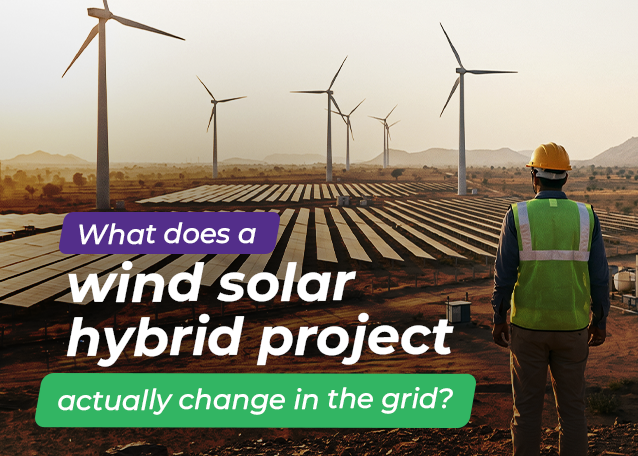
Solar output generally peaks during daytime hours. Wind generation, especially in several Indian corridors, strengthens during evenings and monsoon periods. This combined renewable energy working model improves generation diversity and helps reduce intermittency across large renewable portfolios. This balance is becoming increasingly valuable for utilities managing variable renewable injection.
Hydropower uses flowing or stored water to rotate turbines connected to generators. Traditionally, hydro projects were viewed mainly as generation assets. Today, they are increasingly supporting balancing operations as well.
Renewable-heavy grids require flexible infrastructure capable of responding quickly to sudden changes in supply or demand. Pumped hydro systems help address that challenge by storing energy during lower demand periods. They also release it during peak load conditions.
In many regions, hydro now acts as a stabilising reserve for renewable integration.
Different renewable technologies solve different energy challenges. Some provide low-cost daytime electricity. Others support balancing or dispatchability. Some are suitable for distributed generation, while others operate more effectively at the utility scale. The major types of renewable energy, therefore, work best when deployed as part of an integrated energy mix rather than isolated assets.
Solar energy remains one of the fastest-growing renewable segments globally because of declining module costs, scalable deployment models, and relatively short construction timelines.
Large utility-scale parks, floating solar systems, and rooftop installations are all contributing to rapid expansion. Among the growing uses of renewable energy, solar now plays a major role in industrial open-access procurement and daytime commercial electricity demand.
Solar growth is also reshaping transmission planning itself, especially in high-irradiation renewable corridors.
Wind energy provides strong generation potential in regions with favourable wind profiles, particularly coastal and high-altitude zones. Offshore wind development is also gaining momentum globally.
But wind is no longer being evaluated independently.
Utilities and enterprises increasingly combine wind with solar and storage because diversified generation profiles improve scheduling reliability. Evening wind output, for example, can help offset declining solar generation during sunset hours.
The operational complementarity is one reason hybrid renewable systems are expanding rapidly.
The biomass projects are used to produce electricity through the use of agricultural residue, industrial wastes, and organic matter. Biomass can be a relatively controllable source of generation, unlike solar and wind, since the source of fuel is storable. This makes biomass particularly convenient in areas of agricultural concentration and distributed industrial demand.
Biomass infrastructure, in addition to electricity generation, can be used to help reduce waste, support rural economic activity, and provide local energy resilience. It might not be as attractive as solar or wind, yet the value obtained from the grid is high.
Geothermal energy uses heat stored beneath the Earth’s surface to generate electricity or provide direct heating. Steam or hot water reservoirs located underground are used to drive turbines connected to generators.
Although geothermal deployment depends heavily on geographical conditions, it offers one major advantage over weather-dependent renewables- stable and continuous power generation. Unlike solar or wind, geothermal systems can operate throughout the day with minimal intermittency.
Globally, countries with volcanic and tectonic activity have successfully integrated geothermal energy into their long-term renewable portfolios because of its reliability and low operational emissions.
Tidal energy generates electricity by capturing the movement of ocean tides. As seawater levels rise and fall due to gravitational forces from the moon and sun, turbines convert that kinetic movement into usable electricity.
One of the biggest advantages of tidal power is predictability. Unlike solar irradiance or wind speeds, tidal patterns can be forecast years in advance. This makes tidal systems particularly valuable for future renewable balancing strategies.
However, high infrastructure costs and location-specific feasibility currently limit large-scale deployment in many regions.
Hydropower generates electricity by using the energy of flowing or falling water to rotate turbines connected to generators. It remains one of the oldest and most widely used forms of renewable electricity globally.
Large hydroelectric dams, run-of-river projects, and pumped storage facilities all contribute to modern hydro infrastructure. Unlike some variable renewable sources, hydropower can respond quickly to fluctuations in electricity demand, making it highly valuable for grid balancing and peak-load management.
One of the major advantages of hydropower is its ability to provide relatively stable and dispatchable electricity generation. Pumped hydro systems also support renewable integration by storing excess electricity during low-demand periods and releasing it when demand rises.
The movement toward renewable infrastructure is commonly talked of as a reference to its environmental benefits. Fair enough. But that is not the entire story.
As a matter of fact, the economic factors of energy, fuel security, diversification of transmission and competitiveness of industries are becoming equally significant drivers. The significant advantages of renewable energy at this time go way beyond sustainability.
Renewable generation significantly reduces greenhouse gas emissions compared to coal-based electricity systems. According to the United Nations, the energy sector contributes nearly 75% of global greenhouse gas emissions.
One of the most important benefits of renewable energy is that it allows economies to expand electricity access and industrial output without proportionally increasing carbon intensity. This balance matters more than ever as electricity demand continues rising globally.
Uncertainty in the operation of industries with energy-intensive facilities is also created by the volatility of electricity pricing. Renewable energy alters that.
Over the past decade, solar and wind tariffs have fallen sharply because of the scale efficiencies, technological advances, and expansion of the supply chain. Extended renewable procurement plans consequently provide increased pricing certainty compared to the imported fossil-fuel-based generation.
Data centres, logistics operators and manufacturers find that predictable electricity cost structures make a significant competitive edge.
Countries dependent on imported fuels remain exposed to geopolitical disruptions and international commodity price fluctuations. Renewable infrastructure reduces that dependence.
This is one of the major advantages of renewable energy that often receives less attention in public discussions. Domestic renewable resources strengthen long-term energy resilience by diversifying supply sources and reducing vulnerability to global fuel market instability.
For rapidly growing economies, that flexibility becomes strategically important.
The modern energy ecosystem utilises renewable electricity in many more applications than commonly known. Renewable infrastructure is no longer limited to utility-scale grid supply. The expanding applications of renewable energy today are beginning to be seen across the transportation systems, the industrial operations, the digital infrastructure and the urban development.
The commercial use of renewable electricity is becoming more prevalent in large industrial facilities in captive projects, open-access agreements, and hybrid power structures.
Why? Since industrial operators are looking beyond sustainability targets alone. They are considering both long-term electricity prices, supply diversification and emission reduction commitments at the same time.
Numerous manufacturers are also considering FDRE-supported supply options to enhance reliability without violating renewable sourcing obligations.
Data centres are becoming major electricity consumers globally because of AI expansion, cloud computing growth, and rising digital demand.
This demand growth is increasing the importance of advanced renewable energy providers capable of delivering scalable, reliable, and low-emission power for hyperscale digital infrastructure. Reliability matters enormously here. Even short power disruptions can create significant operational and financial consequences.
Renewable electricity increasingly supports electric vehicle charging infrastructure, railway electrification, metro systems, and green hydrogen production.
Think about urban mobility over the next decade. As EV adoption rises, the charging infrastructure itself will require large-scale clean electricity integration. Renewable-backed charging corridors can significantly reduce lifecycle transport emissions while improving long-term energy efficiency across mobility networks. This is where power infrastructure and transportation planning begin overlapping directly.
Renewable adoption is entering a different phase now. Earlier, the industry focused mainly on adding generation capacity. Today, the larger challenge is reliability.
Industries operating continuous manufacturing lines, digital infrastructure, or critical logistics networks cannot depend entirely on weather-driven variability. They need electricity that behaves like firm power. This is exactly why storage systems, hybrid infrastructure, and FDRE frameworks are becoming increasingly important.
Hybrid systems combine multiple renewable technologies- usually solar, wind, and storage. This is crucial because renewable resources behave differently across time periods and seasons. Solar output may weaken during monsoon months, while wind generation often improves. Storage systems help bridge temporary gaps between generation and demand.
Among emerging renewable energy working model approaches, hybrid systems are becoming one of the most effective solutions for improving renewable consistency without relying heavily on fossil-fuel-based balancing infrastructure.
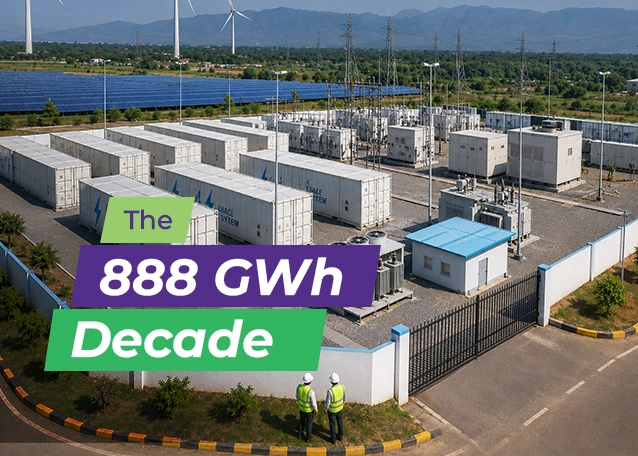
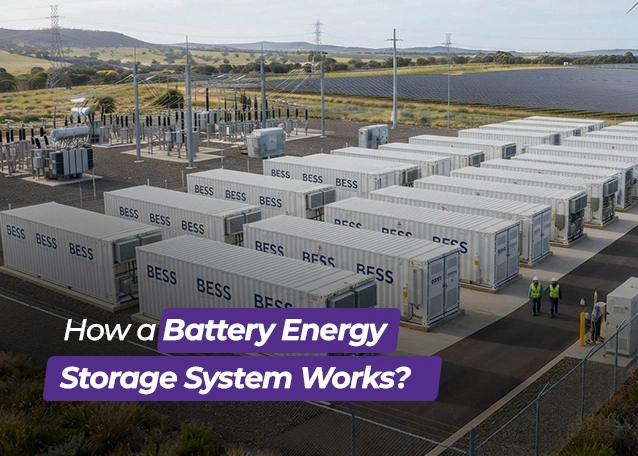
Battery storage systems store excess renewable electricity during high-generation periods and discharge power during peak demand or lower renewable output conditions.
In simple terms, storage gives renewable infrastructure flexibility.
This shift is fundamentally changing how renewable energy works because renewable projects can increasingly supply electricity when the grid actually needs it instead of only when generation conditions are favourable.
FDRE combines renewable generation, forecasting systems, scheduling tools, and storage infrastructure to deliver a predictable electricity supply across committed time blocks. This distinction is important.
Traditional renewable projects primarily focused on generation. FDRE focuses on delivery certainty.
The broader renewable energy working principle behind FDRE is integration- using multiple technologies together to create stable and dispatchable clean power. Increasingly, industries, utilities, and data centre operators are evaluating FDRE-backed procurement structures because operational continuity matters just as much as sustainability commitments.
Realistically, this may define the next stage of the renewable transition globally.
Also Read: India as a Global Data Centre Hub Powered by Renewables
Renewable energy is no longer developing at the edge of the power sector. It is becoming central to industrial growth, digital infrastructure, and long-term energy security.
But the transition is now moving beyond generation capacity alone. Reliability, storage integration, transmission readiness, and dispatchable clean power are becoming equally important. Technologies such as BESS, hybrid systems, and FDRE are helping renewable infrastructure behave more like dependable base-load power.
This is where Resolven is helping reshape the sector by focusing not only on renewable generation, but also on scalable execution, grid integration, and long-term dependable clean energy delivery.
This is because electricity demand does not move in a perfectly predictable way. A cloudy afternoon, sudden industrial load increase, or transmission constraint can affect renewable supply patterns. Grid support and balancing systems help maintain voltage stability and uninterrupted power flow when those variations happen.
Not always, though many large solar and wind projects are developed where natural resources are strongest. In reality, renewable infrastructure is now appearing across industrial parks, commercial rooftops, logistics hubs, and even near large urban consumption centres where power demand is rising rapidly.
Energy costs have become a long-term business concern rather than just an operational expense. Many companies are looking for stable electricity pricing, cleaner supply chains, and lower exposure to fuel-market volatility. Renewable procurement helps address all three together.
Yes, especially when paired with storage and better forecasting systems. Earlier renewable projects operated more independently, but modern renewable infrastructure is increasingly designed with balancing capability, flexible scheduling, and dispatch support built into the system itself.
Industries such as data centres, advanced manufacturing, transport networks, and digital infrastructure require electricity continuously. They cannot depend only on variable generation windows. Firm renewable models help provide cleaner electricity with greater delivery consistency, which is becoming increasingly important as industrial electricity demand continues rising.