India’s electricity sector in FY 2024–25 presents a structural paradox. While wholesale power prices have softened significantly due to improved supply fundamentals, end-consumer tariffs continue to rise across several states. This divergence highlights both the operational progress of India’s generation mix and the unresolved financial stress in the distribution segment.
Electricity prices discovered on power exchanges witnessed a ~15% year-on-year decline in early 2025, with average day-ahead market (DAM) prices settling at approximately ₹4.25 per unit.
As a result, exchange prices have not only declined but also become less volatile during normal demand periods, reflecting a more resilient supply ecosystem.
Despite cheaper power availability at the wholesale level, retail electricity tariffs are increasing in many states. The primary reason lies in the structural financial weakness of distribution companies (Discoms).
Key stress factors include:
For instance, UPPCL has proposed a tariff hike of nearly 30% for FY 2025–26, aimed at bridging the widening gap between Average Cost of Supply (ACS) and Average Revenue Realised (ARR). Similar tariff rationalization efforts are being pursued by other state utilities to arrest mounting losses.
Short-term market prices continue to exhibit sharp volatility under extreme conditions. In May 2025, spot market prices briefly fell close to zero, driven by:
This reform aims to align consumer demand with renewable generation profiles, reduce peak procurement costs, and defer network capacity investments.
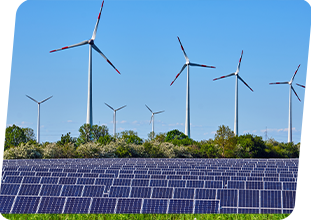
India recorded a peak electricity demand of ~250 GW in June 2025, underscoring rapid economic and climatic demand growth. Large-scale renewable capacity additions—particularly solar and wind—have played a crucial role in moderating wholesale prices and meeting incremental Strong demand.
However:
Thus, while generation economics are improving, cost recovery remains uneven across the value chain.
India’s electricity market is gradually stabilizing at the wholesale level, supported by renewable expansion, improved fuel availability, and market-based reforms. However, retail tariffs are likely to remain under upward pressure until fundamental issues—particularly Discom losses, cross-subsidies, and subsidy discipline—are structurally resolved.
The coming years will be decisive in determining whether India can successfully align affordable power, Discom viability, and clean-energy transition into a sustainable and balanced electricity ecosystem decade ahead.