
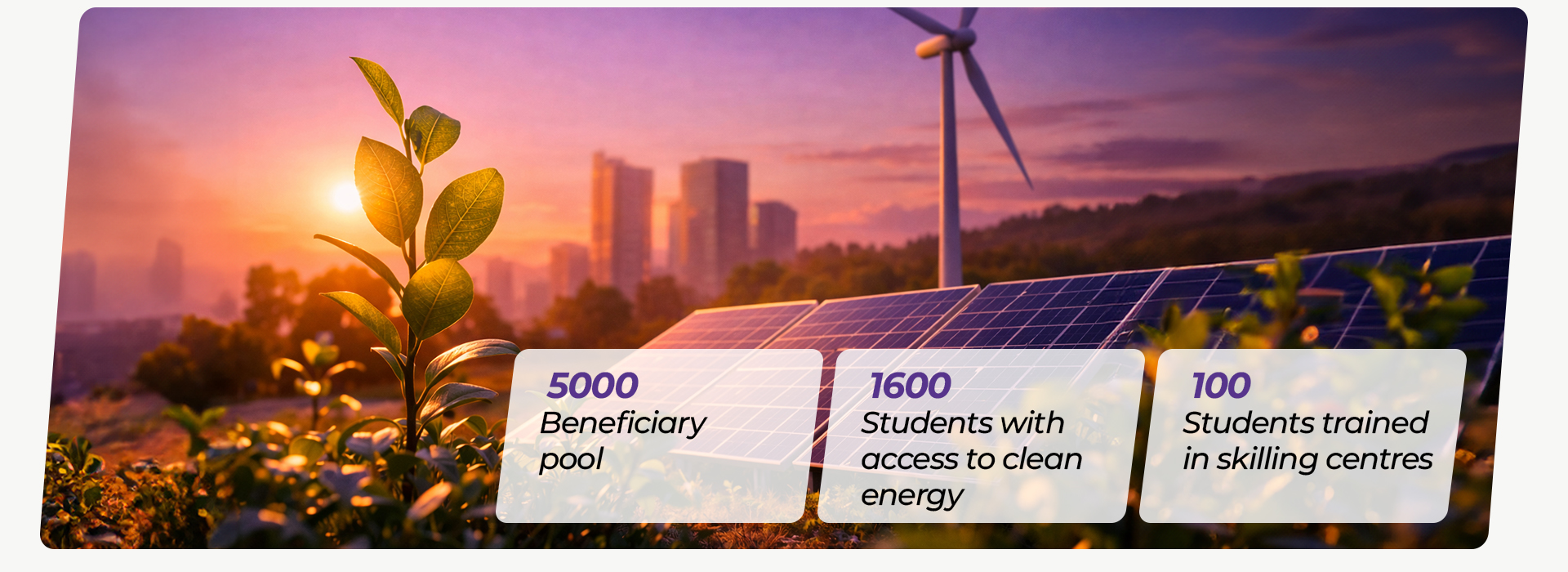


Environmental stewardship, social responsibility, and robust governance
are embedded within the strategic architecture of our business, forming
the foundational pillars upon which we build durable stakeholder value.
Our long-term operational sustainability is intrinsically tied to the
ecological well-being of our operating environments and the communities
within our sphere of influence.
Large-scale renewable energy infrastructure operates within real social, environmental, and economic contexts. At Resolven, accountability does not end at the perimeter of an asset or at the point of commissioning.
We engage with local communities and stakeholders throughout the project lifecycle - during development, construction, and long-term operations - recognising that durable performance depends on trust, continuity, and respect for local priorities.
This approach reflects a broader view of responsibility: one that acknowledges that how projects are delivered and operated matters as much as the energy they produce.
Site selection, technology choices, and system design are informed by environmental considerations, land use impact, and long-term performance requirements.

Execution practices prioritise safety, responsible resource use, and minimising disruption to local environments and communities.
 ️
️
Assets are operated with a focus on efficiency, reliability, and continuous performance optimisation over time.

Project strategies account for responsible asset management across the full lifecycle, including future adaptability, repowering, and decommissioning consideration

Mitigating Environmental Red Flags - Building Climate Resilient Agriculture in the Thar Desert
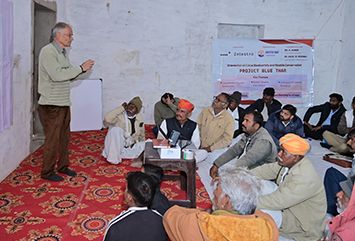
Project Blue Thar is a water conservation initiative implemented in Baori Barsingha village, Phalodi, Rajasthan—one of India’s most water-stressed landscapes. Characterised by arid conditions and erratic monsoons, the region faces chronic challenges related to agricultural productivity and livelihood security. Supported by Resolven, in partnership with United Way of Hyderabad (UWH), the project was designed to strengthen water security while enabling long-term climate resilience for local farmers.
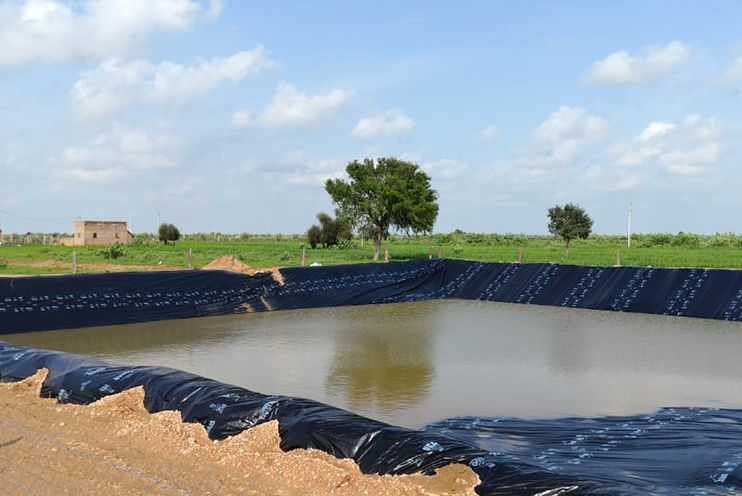

Limited rainfall, rapid runoff, and lack of on-farm water storage left farmers highly dependent on unpredictable weather patterns, restricting cropping cycles and increasing economic vulnerability.
Project Blue Thar adopted an integrated approach combining infrastructure, ecology, and knowledge:
Despite below-average rainfall, both ponds successfully harvested monsoon water and supported timely cultivation of Bajra, Wheat, and Chana. One pond now irrigates 12 acres, enabling sequential cropping and reducing rainfall dependency, while the second supports 2 acres of farmland.
A standout outcome emerged when beneficiary farmer Kannaram installed a 3 kW solar-powered irrigation system, inspired by project workshops. The integration of rainwater harvesting with clean energy has significantly reduced operating costs, improved irrigation efficiency, and demonstrated a scalable model for climate-smart agriculture.
Project Blue Thar reflects Resolven’s commitment to responsible development—where renewable energy, water stewardship, and community resilience converge to create lasting environmental and social value. The two ponds showcased substantial progress in local biodiversity and Environmental Stewardship within the communities and we look forward to scaling it to a community level initiative.
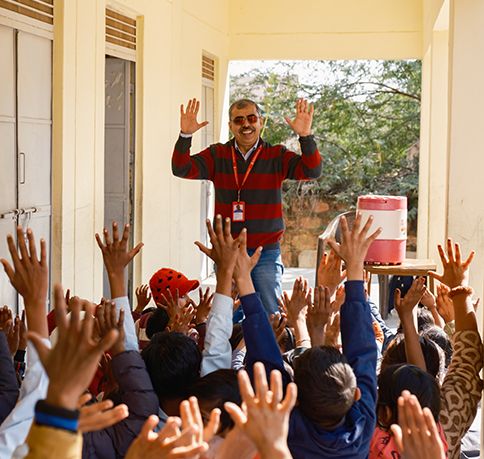
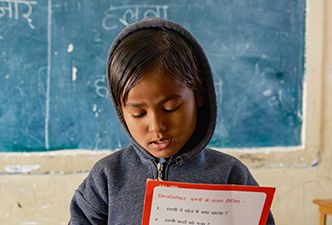
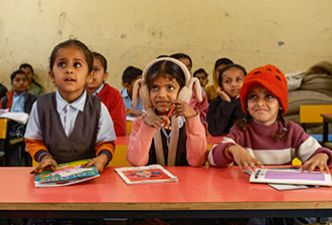
Eco Clubs is a student-led environmental initiative aligned with the National Green Corps (NGC) programme, connecting schools to a nationwide network of over 1.2 lakh eco clubs. The initiative engages 600 students, encouraging grassroots climate action and environmental awareness through participatory learning.
Alongside environmental education, the program also supports remedial learning through Catch-Up Clubs, benefiting 60 students by helping them bridge academic gaps and strengthen foundational skills.
Through Eco Clubs, Organisation is investing in young changemakers while supporting inclusive and sustainable community development.
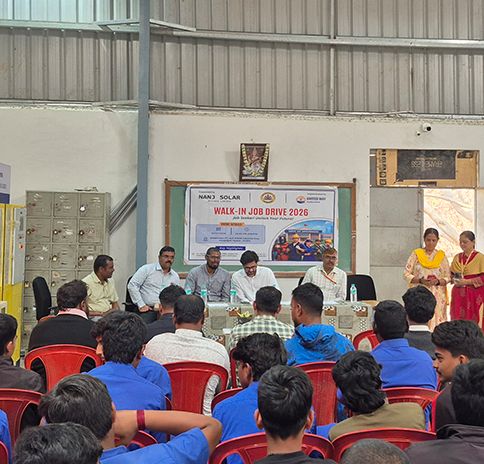
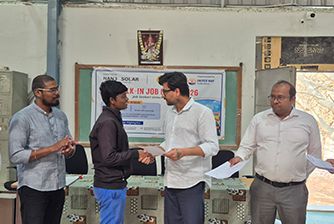
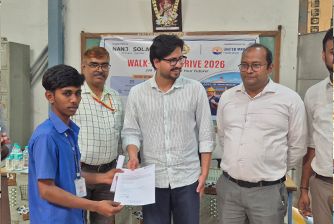
On 30 January 2026, a pilot Job Drive was held at Government ITI, Nanjangud (Mysuru, Karnataka) under the Hunar Project (Nanj Solar Private Limited), in partnership with United Way Hyderabad. Aligned with our 3Es—Education, Energy and Environment—and Resolven’s FutureS program, the initiative concluded a three-month Job Readiness Training (Nov 2025–Jan 2026) for 63 second-year students across six trades.
Fourteen companies, including Johnson Lifts Pvt Ltd and TVS Motor Company Limited, participated. 60 of 63 students were shortlisted (~95%), with 23 receiving on-the-spot appointment letters and 37 entering the hiring pipeline pending ITI certification, reinforcing the impact of demand-linked skilling.
Our implementation partner, Bal Raksha Bharat, operates a Mobile Health Unit (MHU) to deliver essential primary healthcare services to remote and underserved communities in Bari Seer Gram Panchayat, Phalodi.
The initiative focuses on bridging healthcare access gaps through medical consultations, basic diagnostics, free medicines, referrals, and preventive health awareness, with special attention to women, children, and vulnerable populations.
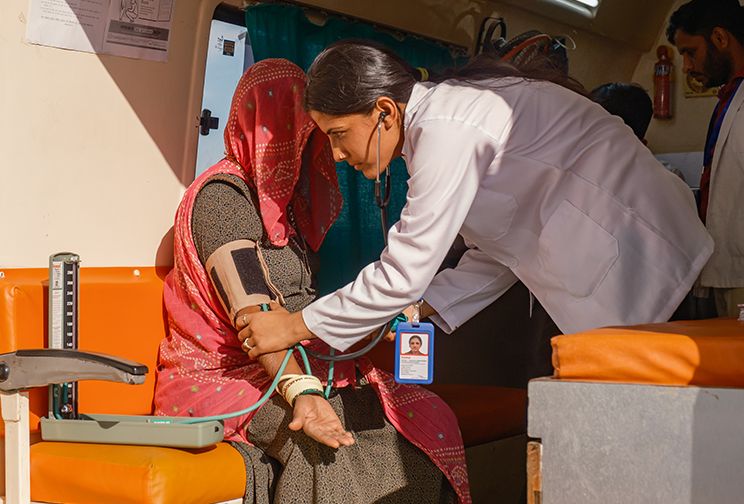
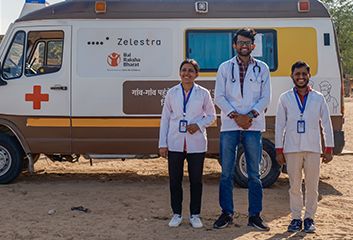
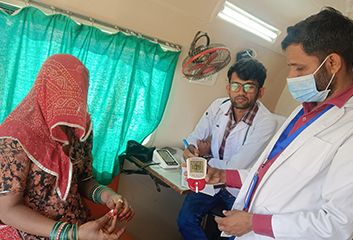
Bari Seer is a remote rural village with limited access to doctors and maternal healthcare facilities. Long travel distances, irregular availability of health personnel, and transportation constraints often disrupt routine antenatal care, increasing health risks for pregnant women.
Through regular MHU camps and proactive community outreach, pregnant women are identified early and supported through counselling, timely referrals, free medicines, and continuous follow-up. Outreach Worker-cum-Nurse Kanchan played a critical role in ensuring treatment adherence, awareness of government health schemes, and access to institutional healthcare.
One such outcome is the case of Veerpal, a 25-year-old pregnant woman identified with moderate anemia (Hb 8.8 gm%). With consistent medical support, nutritional counselling, and referral to higher facilities, her hemoglobin levels improved to 11.1 gm%, significantly reducing pregnancy-related risks.
When a late-stage pregnancy concern arose, swift referral and ambulance support ensured timely medical attention, leading to a safe institutional delivery. Both mother and newborn were healthy at birth and continue to receive postnatal care. This case highlights how last-mile healthcare delivery, strong community engagement, and effective referral systems can substantially improve maternal health outcomes in remote settings.
