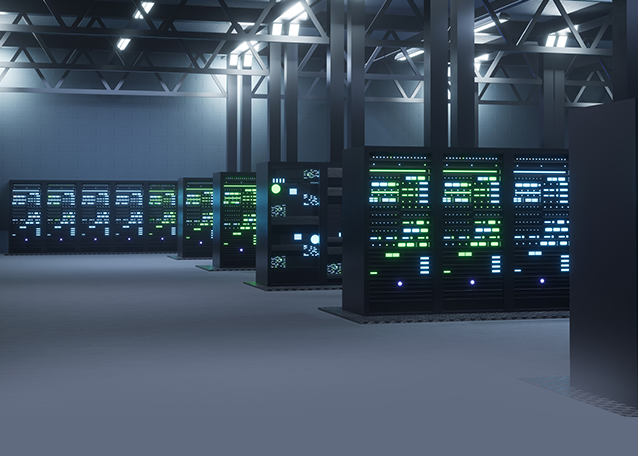
Ask an AI engine a question and the response feels weightless. It is not. Somewhere, a rack of servers ran your prompt through a model with billions of parameters, and cooling systems carried the heat away. Researchers at Epoch AI estimate a typical ChatGPT text query consumes roughly 0.3 watt-hours — trivial on its own, about the same as running an LED bulb for a few minutes. The scale is what changes the picture. At around a billion queries a day, that single service draws on the order of 300 MWh daily — roughly the combined daily electricity consumption of a lakh Indian homes. And queries are only the visible tip: training the models behind them is far more energy-intensive.
Add up everything data centres do — AI, cloud computing, streaming, payments, the ordinary machinery of digital life — and the numbers become national in scale. Data centres consumed about 485 TWh globally in 2025 — up 17% in a single year, far outpacing the 3% growth in overall electricity demand. The IEA projects this will roughly double to 950 TWh by 2030, to slightly more than Japan’s entire electricity consumption today, with AI the single biggest driver. The hardware explains why: a conventional server rack draws 5–10 kW; racks built for AI training draw 20–30 kW, and the densest clusters are heading towards 100 kW.
Definition: Data-centre sustainability is the practice of running data centres on cleanly generated, efficiently used resources — above all, meeting their round-the-clock electricity needs from renewable sources. It is measured less by annual green-energy certificates and increasingly by how much of a facility’s actual, hour-by-hour consumption is served by carbon-free power.
India is at the front of this build-out. Installed data-centre capacity stood at about 1.4 GW in 2025 and is projected to grow around 30% in 2026 alone; estimates for 2030 range from 4–5 GW in base scenarios to 8–9 GW if AI demand accelerates. Data centres in India already source an estimated 30–35% of their power from renewables through purchase agreements, and leading operators have committed to fully renewable operations by 2030.
Three forces are pushing the industry in this direction, and only one of them is environmental.
Customer and investor expectations: Global cloud and AI customers increasingly ask where a facility’s power comes from — hour by hour, not just on an annual average. Green power is becoming a condition of winning workloads.
Cost and predictability: Electricity is one of the largest operating costs of a data centre, and retail tariffs for commercial consumers have trended upwards across most Indian states. Long-term renewable contracts convert that exposure into a predictable cost over decades.
Genuine sustainability: A facility that runs around the clock on fossil-heavy grid power carries a carbon footprint that grows with every new AI workload. Clean supply is the only way the sector’s growth and its climate commitments can coexist.
From certificates to actual clean power: The industry is moving beyond offsetting annual consumption with certificates towards physically matching consumption with carbon-free supply, hour by hour.
Firm renewable supply: Solar or wind alone cannot serve a 24x7 load. Portfolios that combine wind, solar, and battery storage can replace most of a facility’s round-the-clock consumption with renewable power.
Efficiency inside the facility: Better cooling, higher rack utilisation, and improving power-usage effectiveness reduce how much energy each workload needs in the first place.
Procurement over the national grid: Rather than being limited to local supply, operators increasingly contract power from renewable-rich states and have it delivered wherever their facilities sit.
A data-centre operator in India has several routes to clean power: on-site solar (useful but small relative to the load), green tariffs from the local distribution utility, and open-access renewable power contracted directly from producers. For large, always-on AI loads, renewable energy solutions for data centers increasingly centre on the third route — long-term contracts for hybrid wind–solar–storage supply, which can physically replace more than 80% of a facility’s round-the-clock consumption with renewable power, including the costly evening peak windows.
Yes — and this is one of the least understood advantages. India’s ISTS (Inter-State Transmission System) is the national grid network that moves power between states. Under it, renewable energy generated at resource-rich sites —in Gujarat, in Rajasthan or Andhra Pradesh — can be delivered to a consumer in any state, including locations far from renewable resources. Because inter-state transactions are governed by a single central regulatory framework, buyers also gain regulatory consistency across states for the life of the contract. To encourage this route, the Government of India has exempted ISTS transmission charges for renewable projects commissioned on or before 30 June 2028. Ver fewLeading data-centre operators are already drawing ISTS renewable power for facilities across multiple states. How ISTS transactions work — and how buyers qualify — deserves its own explainer, which we will publish separately.
Resolven builds and operates utility-scale wind, solar, hybrid, and battery storage projects, and offers data centres a customised firm-power solution from its ISTS-connected portfolio. Wind and solar capacity at resource-rich sites, integrated with battery storage, is engineered to serve around 85% of a facility’s annual round-the-clock requirement — including roughly 90% of the evening peak hours — delivered anywhere in India over the national grid. Contracts run long-term at a fixed tariff, giving energy budgets decades of predictability, with savings typically in the range of 25–30% compared with DISCOM supply, alongside insulation from state-to-state regulatory variation. For data-centre leaders planning AI capacity, Resolven’s enterprise solutions are designed to make clean power the simplest part of the build.
Is using AI bad for the environment?
A single query is a small draw — the environmental question is really about how the data centres behind AI are powered as usage scales. Growth served by renewable supply has a fundamentally different footprint from the same growth served by fossil-heavy grid power.
Can a data centre run entirely on renewable energy?
Very nearly. Hybrid wind–solar–storage portfolios can physically replace more than 80% of a round-the-clock load with renewable power; the remainder is drawn from the grid. As storage costs fall, that replaceable share keeps rising.
What is ISTS in one line?
ISTS — the Inter-State Transmission System — is India’s national grid network, which allows renewable power generated in one state to be delivered to a consumer in any other state under a central regulatory framework.
AI will keep growing, and so will its appetite for electricity. The operators who secure firm, affordable clean energy for data centers early will carry both a cost advantage and a credible sustainability story — to customers, investors, and regulators alike.