

|
In short: India's carbon credit trading scheme (CCTS) sets emission intensity targets: limits on emissions per tonne of product, not caps on how much a plant can make. Nearly 490 industrial units across seven energy-intensive sectors now have targets. Because the targets are per tonne, a plant can grow and still comply, as long as its emissions per tonne stay within its target. Emissions from purchased electricity count too, which makes cleaner electricity one of the most practical ways to get there. |
Picture the head of an export-focused plant making aluminium or cement. For years, carbon showed up once a year, as a few pages in the sustainability report: compiled, filed, and largely separate from the business of making and selling product.
That is changing on two fronts at once.
At home, India's carbon market has moved from design into its first compliance years. Abroad, carbon is starting to show up in the price of goods at the border. Europe's carbon border adjustment mechanism moved into its definitive phase on 1 January 2026. The UK's version starts on 1 January 2027 and covers aluminium, cement, fertiliser, hydrogen, and iron and steel.
Carbon is no longer just a reporting line. It is becoming a cost line, and for the companies that get ahead of it, a source of value.
|
Definition — Carbon Credit Trading Scheme (CCTS): India's national framework for putting a price on greenhouse gas emissions. Under its compliance mechanism, the government sets emission intensity targets for energy-intensive industrial units. Units that do better than their target earn carbon credit certificates they can sell. Units that fall short must surrender certificates, bought or banked, to cover the gap. |
The scheme was notified in 2023 and has been built out in stages. In October 2025, emission intensity targets were notified for 282 units in aluminium, cement, chlor-alkali, and pulp and paper. In January 2026, 208 more followed, in textiles, petroleum refining, petrochemicals and secondary aluminium. When the Indian Carbon Market portal went live in March 2026, the government described the scheme as covering nearly 490 obligated entities across seven energy-intensive sectors. Targets for iron and steel have been published in draft.
The roles are clearly set out. The Bureau of Energy Efficiency runs the scheme. Grid-India keeps the registry. The Central Electricity Regulatory Commission regulates the trading of certificates on power exchanges. No certificate has traded on an exchange yet; trading follows once the first certificates are issued.
The biggest change is in how carbon behaves on the balance sheet.
Until now, emissions were mostly something to measure and report. Under the CCTS, they carry a value. A unit that beats its target ends the year holding a carbon credit certificate for every tonne of CO2-equivalent by which it beats its target, an asset it can keep for later or sell. A unit that misses has to make up the gap with certificates. Two plants making the same product can now finish the year in very different financial positions, purely on how cleanly they make it.
The border adds a second layer. The UK has named India's CCTS on its draft list of qualifying carbon pricing schemes under its CBAM. In practice, an effective carbon price paid in India, calculated and evidenced under UK rules, can reduce the UK charge on the same goods. For exporters, a domestic carbon price stops being only a cost. Paid and documented properly, it can keep the same tonne of carbon from being charged twice.
This is the question many in industry are now asking out loud. India is in the middle of a manufacturing push. Plants are expanding and new lines are being commissioned. Does a carbon target put a brake on that?
The design of the scheme gives a reassuring answer. CCTS targets are set on emission intensity: tonnes of CO2-equivalent per tonne of product. They are not a cap on total emissions. A plant that doubles its output has not broken its target, as long as its emissions per tonne stay within its target. Growth and the carbon target are measured on different axes.
That does not make the targets easy. Lowering intensity year after year takes real change in how a plant runs. But it does change the question. It is no longer "grow or go green?" It is "how do we make every additional tonne cleaner than the last?"
For many plants, one of the quickest answers is the electricity they buy.
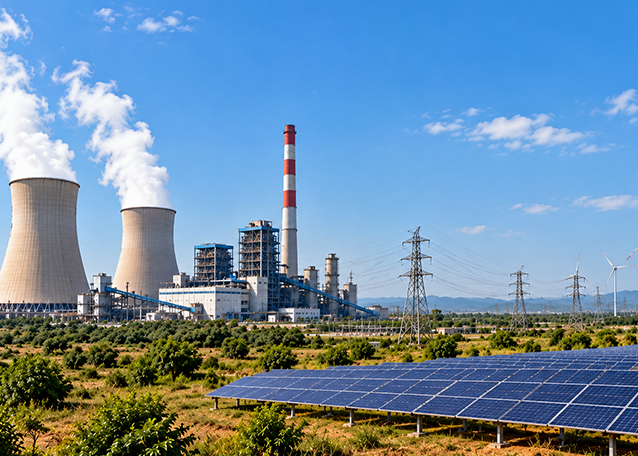
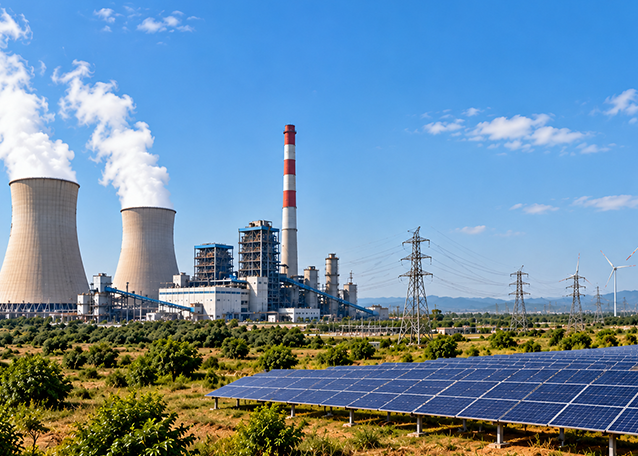
The emission intensity calculation under the CCTS counts direct emissions from fuel and processes. It also counts indirect emissions from the electricity a plant purchases. Under the scheme's compliance procedure, renewable electricity is treated as zero-emission, whether it is generated on site or procured off site through open access, a dedicated power purchase agreement or a green tariff, subject to the scheme's monitoring and verification requirements. Every unit of grid electricity that is replaced with renewable electricity takes its emissions out of the calculation.
That makes power one of the most practical levers available. It doesn't need a kiln redesigned or a production line rebuilt. It can be arranged through supply structures that already exist, such as a long-term power purchase agreement, open access or a captive or group captive arrangement. And it can scale with the plant: as output grows, the clean supply can grow with it, and a wind-solar hybrid supply can cover more of the day than a single source.
There is a second benefit, closer to the CFO's desk. A long-term renewable contract usually comes with a predictable energy cost over many years. So the same decision that lowers emission intensity can also bring budget certainty. That is what aligning growth, sustainability and energy security in the transition era looks like in practice: one decision serving all three, rather than one traded off against another.
Renewable energy certificates are a different instrument with their own rules, and they do not count towards this calculation. Our guide to renewable energy certificates and carbon credits explains how they differ.
Every new market runs on confidence: that a tonne is a tonne, that a certificate means what it says, and that its price reflects real supply and demand.
The scheme's design already puts weight on each of these. Accredited carbon verification agencies check reported emissions. A central registry tracks every certificate. Trading is set to take place on regulated exchanges under CERC's rules. Recognition overseas, like the UK's, shows that this groundwork is being noticed.
Industry has its part to play too. Accurate measurement, well-kept records and genuine reductions, not just credits on paper, are what will give India's carbon price weight at home and abroad.
Carbon used to sit at the end of the year, in a report. Now it sits in the price of a product, the value of a certificate and the terms of an export contract. The businesses that treat it as a business question, not a compliance chore, will be the best placed as carbon pricing matures in India and abroad.
So, back to the question many in industry are asking: how do we balance ambitious emission targets with fast manufacturing growth? Part of the answer is already in the design of the scheme. Much of the rest may lie in the electricity you choose to buy.
What will your next tonne look like?
The Carbon Credit Trading Scheme, India's national framework for pricing greenhouse gas emissions. Its compliance mechanism sets emission intensity targets for energy-intensive industrial units and lets them trade carbon credit certificates.
Yes. The calculation includes indirect emissions from purchased electricity. The scheme's compliance procedure treats renewable electricity as zero-emission when it is generated on site or procured through open access, a dedicated power purchase agreement or a green tariff, subject to its monitoring and verification requirements. Renewable energy certificates do not count towards it.
No. Targets are set per tonne of product, not as a cap on total emissions. A plant can increase output and still meet its target, as long as its emissions per tonne stay within the target.
From 1 January 2027, the UK will charge for the carbon embedded in imports of aluminium, cement, fertiliser, hydrogen, and iron and steel. The UK has listed India's CCTS in its draft list of qualifying carbon pricing schemes, so an effective carbon price paid in India, calculated and evidenced under UK rules, can reduce the UK charge.